Marriage Certificate Apostille vs. Embassy Legalization: What’s the Difference?
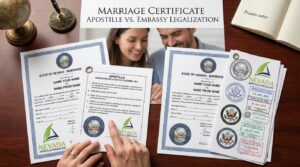 When preparing documents for international use, many people assume that apostille certification and embassy legalization are the same process. While both methods are used to authenticate documents for foreign countries, they follow different procedures and apply to different international requirements.
Understanding the difference between marriage certificate apostille vs. embassy legalization is extremely important because submitting documents through the wrong authentication process can delay visas, immigration applications, overseas employment paperwork, or legal proceedings abroad.
Whether you are applying for residency, international marriage registration, dual citizenship, or overseas adoption, knowing which authentication method your destination country requires can help you avoid unnecessary complications.
This guide explains the difference between apostille vs. legalization, how the embassy authentication process works, when Hague Convention legalization applies, and why international document legalization rules vary between countries.
What Is a Marriage Certificate Apostille?
A marriage certificate apostille (Blog 1) is an official certification that verifies the authenticity of a marriage certificate for international use in Hague Convention countries.
The apostille confirms:
- the signature on the document is authentic,
- the issuing authority is legitimate,
- and the government seal is valid.
In the United States, apostilles for marriage certificates are generally issued by the Secretary of State where the document originated.
For example, if a marriage certificate was issued in Nevada, the apostille process is usually handled through the Nevada secretary of state.
Countries that are members of the Hague Apostille Convention accept apostilles without requiring additional embassy authentication.
This simplified process is one reason many applicants first research what a marriage certificate apostille is (Blog 1) before submitting documents internationally.
What Is Embassy Legalization?
Embassy legalization is a more complex authentication process required for countries that are not part of the Hague Apostille Convention.
Instead of relying on a single apostille certificate, legalization usually requires multiple verification steps, including:
- state authentication,
- federal certification,
- and embassy or consulate approval.
This process is commonly known as the embassy authentication process.
The purpose of legalization is similar to apostille certification: confirming that foreign public documents are legitimate and legally recognized abroad.
However, legalization typically involves more paperwork, additional processing time, and stricter verification requirements.
Countries outside the Hague Convention often require international document legalization before accepting marriage certificates for immigration, employment, or legal use.
What Is the Hague Apostille Convention?
The Hague Apostille Convention is an international agreement created to simplify document authentication between participating countries.
Before the Convention existed, international documents often required lengthy embassy legalization procedures. The Hague system reduced this complexity by allowing participating countries to recognize apostilles directly.
Today, many countries including:
- Italy,
- Spain,
- France,
- Germany,
- Mexico,
- Australia,
- and South Korea
accept apostille certification under Hague Convention rules.
When both countries belong to the Convention, apostille certification is generally enough for legal international use.
This is why understanding Hague Convention legalization requirements is essential before starting document authentication procedures.
What is the main difference between an apostille and Legalization?
The biggest difference between apostille certification and legalization is the destination country’s participation in the Hague Convention.
An apostille is used for:
- Hague Convention countries
- simplified authentication
- single government certification
- faster processing
Legalization Is Used For:
- non-Hague countries
- embassy or consular approval
- multiple authentication steps
- more complex verification procedures
If the destination country is part of the Hague Convention, an apostille is usually sufficient.
If the country is not a Hague member, embassy legalization may be required instead.
Many applicants become confused about apostille vs. legalization (Blog 10) because both processes serve similar purposes while following completely different procedures.
Which Countries Require Embassy Legalization Instead of an Apostille?
Several countries still require embassy legalization because they are not members of the Hague Apostille Convention.
Requirements can change over time, but some non-Hague countries may require:
- embassy certification,
- consular legalization,
- or additional government authentication steps.
Because international regulations evolve, applicants should always confirm document requirements directly with:
- immigration authorities,
- embassies,
- consulates,
- or professional authentication providers.
Nevada apostille specialists often help clients determine whether apostille certification or embassy legalization is required before documents are submitted internationally.
Why Do Foreign Governments Require Authentication?
Foreign governments use authentication procedures to prevent fraud and verify the legitimacy of official documents issued overseas.
Without authentication, foreign authorities may have no reliable way to confirm:
- whether the document is genuine,
- whether the issuing office is legitimate,
- or whether signatures and seals are authentic.
This is why many countries require authenticated marriage documents for:
- spouse visas,
- overseas employment,
- residency permits,
- family reunification,
- adoption cases,
- and foreign court proceedings.
If you are relocating internationally, understanding why employers abroad require a marriage certificate apostille (Blog 4) can help explain why authentication is often mandatory for dependent visas and family relocation applications.
When Do You Need an Apostille or Legalization for a Marriage Certificate?
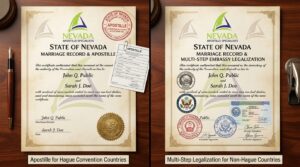 Marriage certificate authentication is commonly required in situations involving:
- immigration,
- overseas marriage registration,
- work visas,
- international adoption,
- citizenship applications,
- and legal proceedings abroad.
For example:
- Hague Convention countries usually request apostille certification.
- Non-Hague countries may require legalization through embassies or consulates.
Using the wrong process may result in:
- rejected paperwork,
- immigration delays,
- visa denial,
- or legal complications overseas.
This is one reason many applicants first research what happens if a marriage certificate has no apostille (Blog 3) before submitting international documents.
How Does the Embassy Authentication Process Work?
The legalization process usually involves several stages.
Step 1: Obtain Certified Documents
Applicants must first obtain official certified copies of marriage certificates or other required records.
Step 2: State Authentication
The issuing state verifies the authenticity of the document.
For Nevada-issued records, this step may involve state-level authentication procedures.
Step 3: Federal Certification
Some countries require additional authentication through the U.S. Department of State.
This becomes especially important for federal records such as FBI background checks.
Understanding Nevada Apostille vs. Federal Apostille (Blog 9) is important because state authorities cannot apostille federal documents.
Step 4: Embassy or Consulate Legalization
Finally, the destination country’s embassy or consulate reviews and legalizes the documents for international acceptance.
This final step officially authorizes the documents for legal use in non-Hague countries.
Because the process involves multiple government offices, legalization often takes longer than standard apostille certification.
How Long Does Apostille or Legalization Take?
Processing times depend on:
- the document type,
- destination country,
- government workload,
- mailing times,
- and whether expedited processing is requested.
Apostilles are generally faster because they involve fewer authentication steps.
Legalization can take significantly longer because documents move through multiple agencies and embassy review stages.
Applicants facing travel or immigration deadlines often ask how long an apostille takes (Blog 7) before beginning the authentication process.
If delays occur, understanding why an apostille takes so long (Blog 15) may help explain extended processing timelines.
Common Mistakes During Apostille and Legalization Processing
Authentication requests are frequently delayed because of avoidable mistakes.
Common issues include:
- unofficial copies,
- incomplete notarization,
- incorrect translations,
- expired supporting documents,
- or submitting documents to the wrong office.
Some applicants mistakenly request apostilles for countries that actually require legalization.
Others attempt legalization when apostille certification would have been sufficient.
This is why reviewing common marriage certificate apostille mistakes to avoid (Blog 8) before submission can help prevent delays and rejected paperwork.
Can Apostille or Legalization Be Processed by Mail?
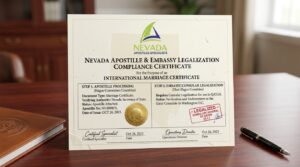 Yes. Many authentication requests can be submitted through mail-in processing.
Applicants usually need:
- certified documents,
- completed forms,
- payment,
- and prepaid return shipping.
Because original records are often required, many applicants review how mail-in apostille works for marriage certificates (Blog 12) before sending important documents internationally.
Nevada Apostille Specialists also assists clients with mail-in apostille coordination and embassy legalization support for international document processing.
Frequently Asked Questions
Is an apostille the same as legalization?
No. Apostilles are used for Hague Convention countries, while legalization is required for non-Hague countries.
Which countries accept apostilles?
Countries that belong to the Hague Apostille Convention accept apostilles directly without embassy legalization.
What happens if I use the wrong authentication process?
Submitting documents through the wrong process may result in rejected paperwork, delayed visas, or legal complications abroad.
Can Nevada apostille federal documents?
No. Federal records such as FBI background checks require federal authentication procedures.
Is embassy legalization slower than apostille certification?
Usually yes. Legalization often takes longer because documents must pass through multiple government and embassy offices.




Have Any Question?
Get In Touch:
getnotarized@apostillenevada.com